

Is Lord of the Ocean Rigged? a Slot You Can Check
In short — our verdict: 5.8/10 — Lord of the Ocean is an RNG reel game, which leaves a single spin impossible to recompute. What a player can verify instead is the paytable, the operator's published return and the supplier's licence number.
A slot that hides its payout rules would be worth worrying about. This one publishes them on four screens inside the client. That moves the real question away from whether the reels are honest, and onto whether you can find out which version of them you opened.
5.8/ 10
- Return configuration4.0
- Licence and certification7.0
- The expanding-symbol feature6.5
- Bet grid and ceiling6.0
- Disclosure5.5
Table of contents
- Lord of the Ocean Strengths and Weaknesses
- What the Registers Say About the Supplier Group
- What the Gambling Commission Recorded
- No Seed, No Hash, Nothing to Recompute
- The Paytable You Can Check Yourself
- Why "rigged" Is the Wrong Question
- Three Sites, Three Different Answers
- Certificates That Stay Inside the Lab
- What Three British Licensees Print About the Same Game
- Our Lord of the Ocean Verdict and Rating
- Key Terms Used on This Page
- What Else Do Readers Ask
Lord of the Ocean Strengths and Weaknesses
Pros: What Works Well
- Pro: Every payout rule is printed across four panels of the client, and we read all four in the maker's own demo build. British sites put the same panels behind registration.
- Pro: Of six British licence accounts held across the group, five come back clean in the regulator's own published data.
- Pro: Malta's enforcement register holds 162 entries from 2013 to 2026, and this group is absent from all of them.
- Pro: The paytable we read matched Austria's binding game conditions row for row, so two independent documents describe the same maths.
- Pro: Three British licensees publish a return for the game, and each figure is attributable to the brand that printed it.
Cons: What Holds It Back
- Con: A spin stays unauditable: seed, published hash and fairness panel are all absent from the client.
- Con: Certificates for this title stay inside the laboratories that issued them: GLI hides its lookup behind an account, two pages answer 403 and 404, two domains fail to resolve, and a sixth site returns no hit.
- Con: Greentube Alderney, the group company behind Admiral Casino, settled with the British regulator for £1,000,000 in January 2025.
- Con: One British licensee still tells players about autoplay and £100 stakes, both impossible under rules in force since 2021 and 2025.
- Con: Two British sites on our list leave the return blank, which leaves a player there with nothing to compare.
What the Registers Say About the Supplier Group
| Register | Entry we read | Result |
|---|---|---|
| British Gambling Commission, account 39050 | Greentube Alderney Limited | £1,000,000 settlement, |
| British register, five further group accounts | 41020, 43091, 48666, 45352, 53969 | no regulatory actions recorded |
| Malta Gaming Authority enforcement list | 162 entries, 2013 to 2026 | none names this group |
| Sweden, supervision of software licensees | nine companies named | none from this group |
| Laboratory certificate for this title | six lookups plus Greece's register | none published |
Figures current as of ; the operator's live terms prevail.
What the Gambling Commission Recorded
Three of the five British sites carrying this game have been sanctioned, and the documents are public. Platinum Gaming, which runs Unibet and 32Red, took a £10,000,000 penalty on for anti-money-laundering and customer-interaction failures between January 2023 and May 2024. Gamesys, behind Jackpotjoy, took £6,071,292 on , a figure that includes £165,042 of divestment.
The one closest to this game is the supplier's own. Greentube Alderney Limited, the company behind Admiral Casino, agreed a payment of £1,000,000 in lieu of a penalty on . A review had found failings in anti-money-laundering and social-responsibility controls. The same document records that the Commission found no evidence of money laundering or criminal spend.
Rank Interactive and Midnite appear nowhere in the register.
We parsed all 137 entries to be able to write that sentence, and a clean account deserves stating as plainly as a penalty does. Five of the supplier group's six British accounts carry the register's own line about having nothing recorded against them.
No Seed, No Hash, Nothing to Recompute
The reels here run on a random number generator, so the honest answer is that you cannot audit a spin. The client withholds a server seed, leaves the client seed out of your hands, posts a commitment nowhere before the round and ships without a fairness panel.
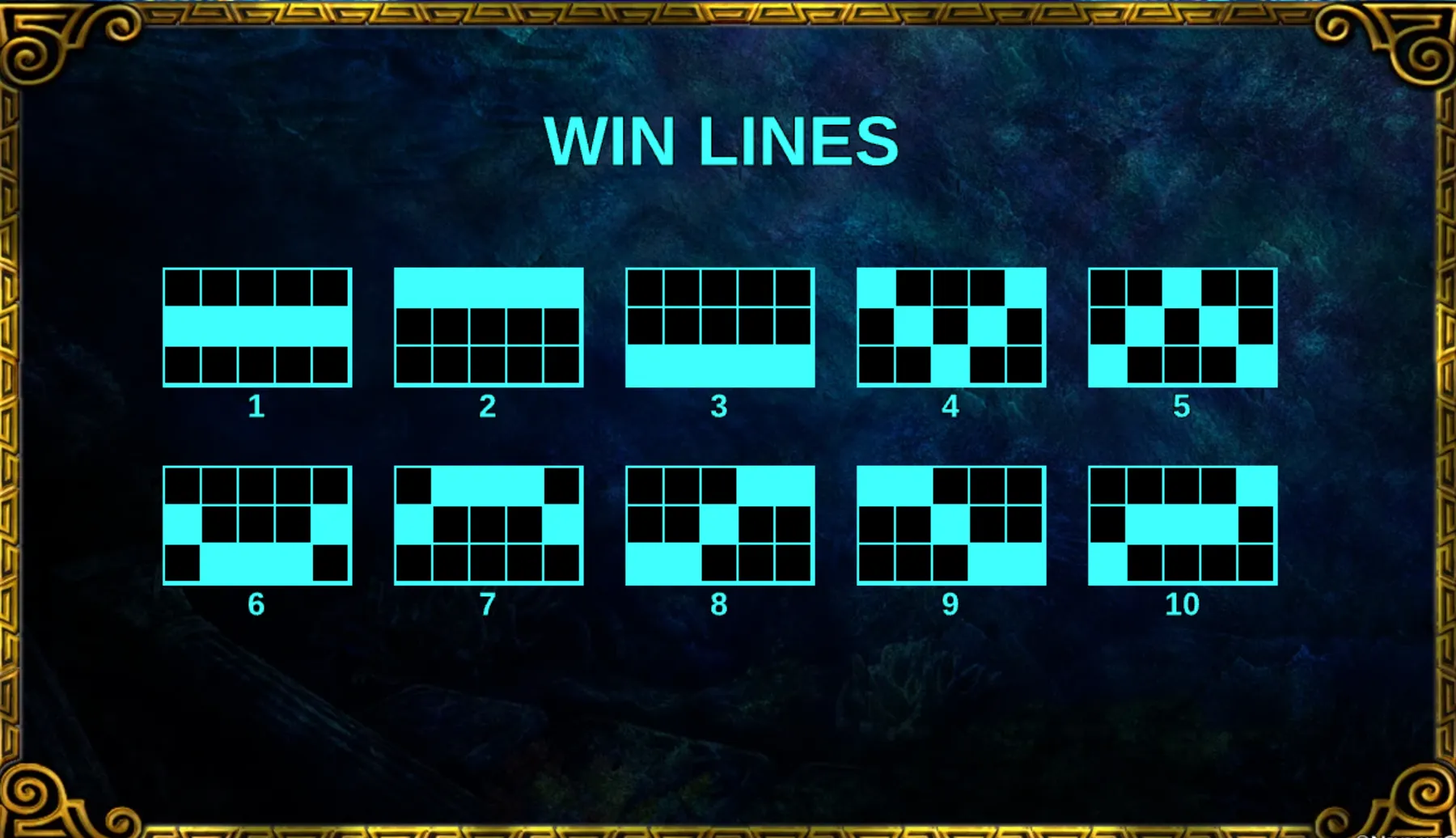
Anyone offering you a way to verify an individual result here is describing a different kind of product.
Crash games and some dice games publish a seed before the round and reveal it after, which lets a player redo the arithmetic. Book slots have always worked the other way, and this one follows them, so fairness rests on testing and licensing rather than on anything you can recompute at your desk.
What replaces it is duller and more useful: a published paytable, a published return per licence, and a supplier whose licences carry numbers you can type into a regulator's search box.
The Paytable You Can Check Yourself
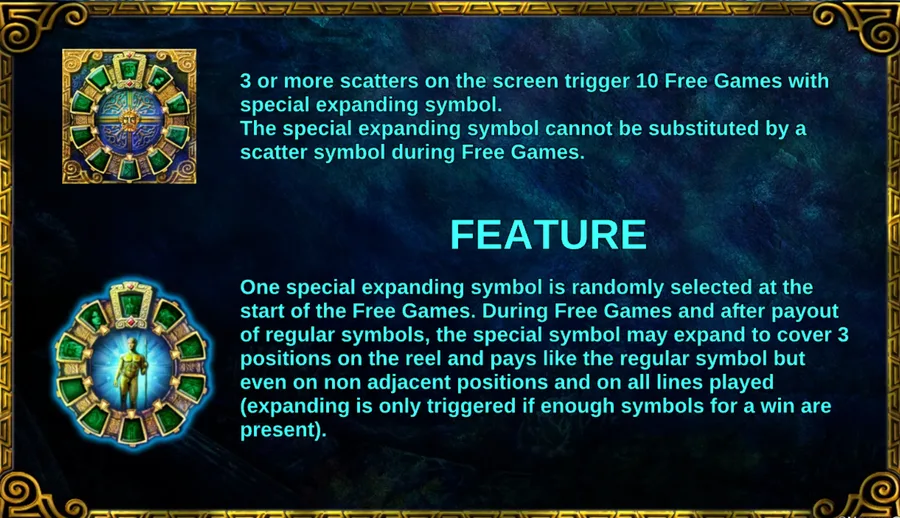
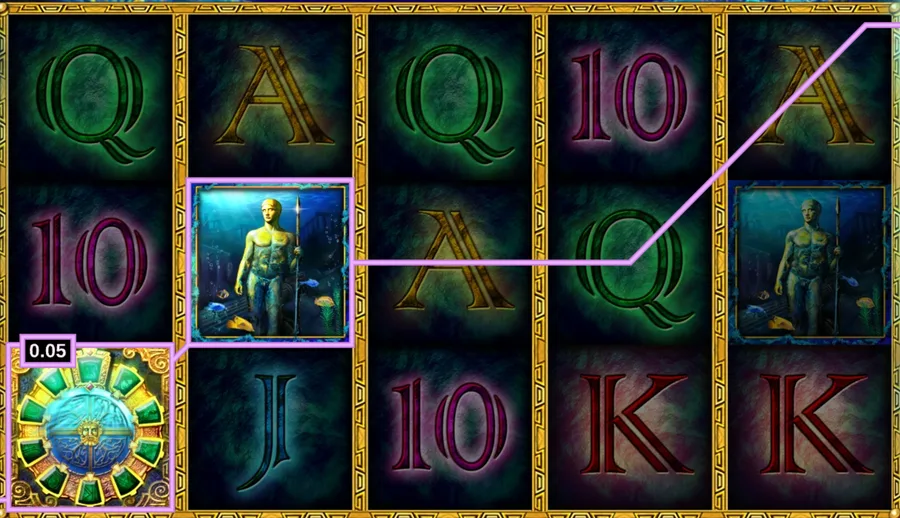
Four screens, free to reach in the maker's demo build, and the numbers held up. At a 0.10 stake across ten lines the client printed Poseidon at 50.00 for five and the mermaid at 20.00. The chest and the statue came in at 7.50 each, Ace and King at 1.50, and the three card symbols at 1.00.
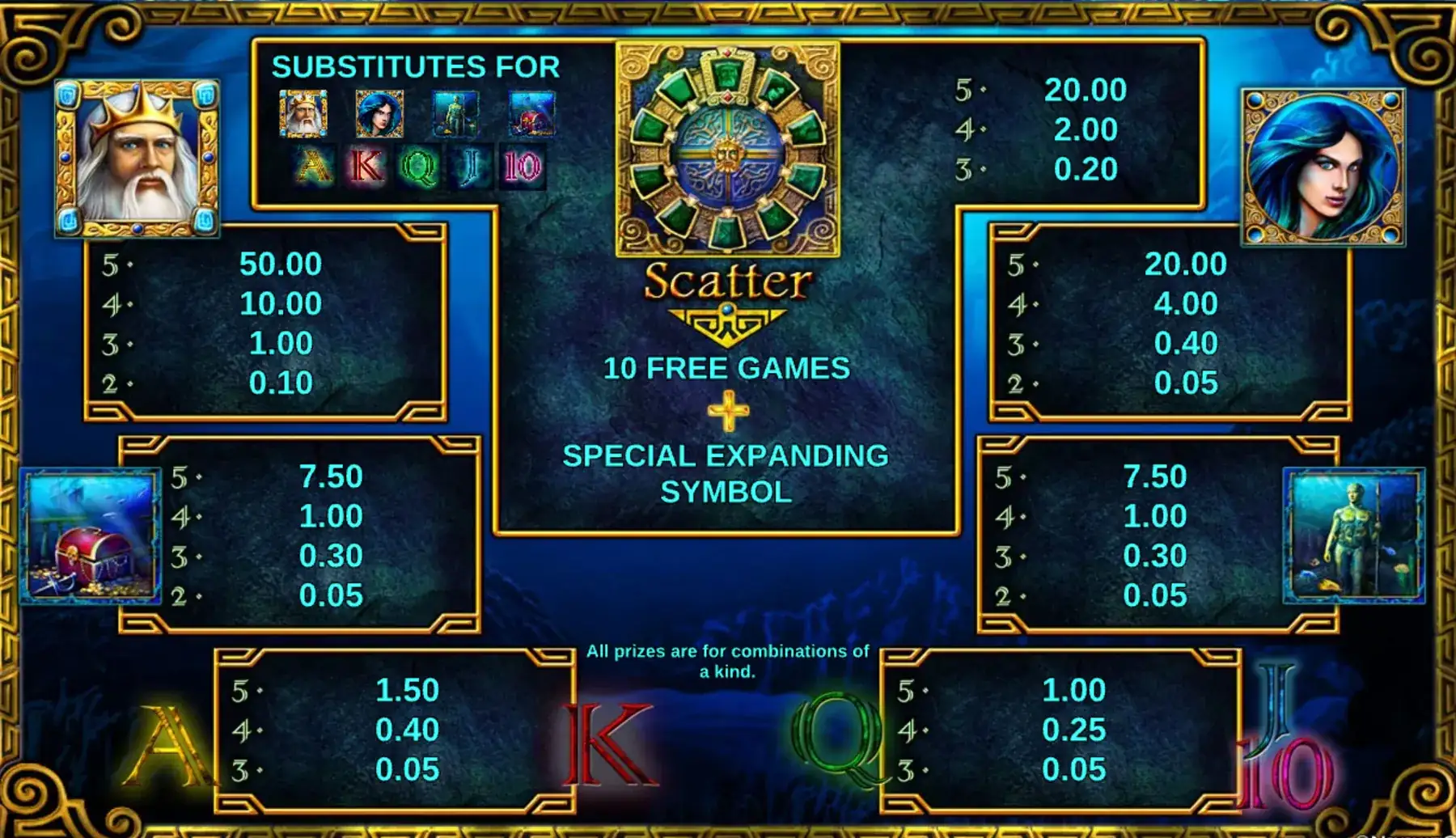
Divide by the 0.01 line bet and that is 5,000, 2,000, 750, 150 and 100 per line. Those are the same figures Austria's state operator publishes in its binding conditions for the title, which is a second document written by someone with a licence to lose.
Two sources agreeing on nine rows still proves little about any single spin. It does mean the rules you are told about are the rules that got filed.
Why "rigged" Is the Wrong Question
The word suggests a hidden switch. The actual problem is published in plain sight: the same game ships at different returns, and the one you get depends on which build your casino licensed.
We counted seven published figures, from 88.21% at Germany's Slotmagie to the 95.10% the client itself states. Greentube's own British casino runs 92.13%. All of it sits in the open, scattered across pages a player would rarely visit.
A game that pays 88.21% is still a straight game.
A player who believes they are on 95.10% while playing it has still been let down, and by a gap of nearly seven points.
Three Sites, Three Different Answers
Midnite prints 95.10% three times on one page. Lucky Pants Bingo prints 95.1%. Admiral Casino prints 92.13%, and Admiral is the supplier's own brand, which makes it the most interesting of the three.
Jackpotjoy and Unibet leave the space blank. Both have the field ready. Jackpotjoy's help centre points players to the More Info panel on a game, and Unibet's own interface dictionary carries an RTP label that stays empty for this title.
They are allowed to do that.
The British technical standards let an operator disclose either the return or the probability of winning events occurring, which means a game page carrying no percentage breaks no rule at all. It also means the gap between the best and worst disclosure in this list is a choice rather than a requirement.
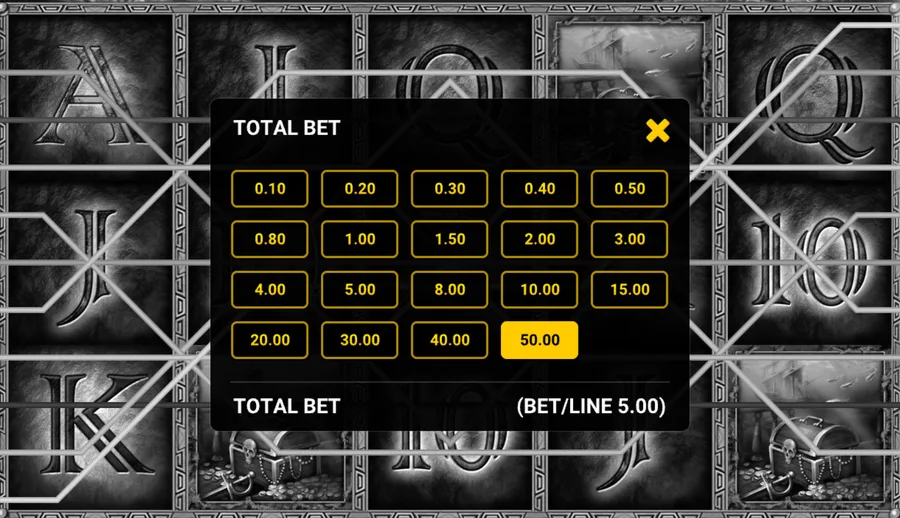
Rank's write-up goes further and describes a button that cannot legally exist. It tells players to click Autoplay and choose between 10 and 50 spins, says they can multitask while playing, and offers stakes from 10p to a maximum of £100. Autoplay has been banned on British slots since , playing several games at once is banned too, and that £100 ceiling sits twenty times above the £5 cap on a game cycle introduced on . Unibet carries the same class of error in its promotional terms, which still forbid staking more than £15 a spin on slots with bonus funds. We mention both so the criticism lands evenly, and because it bears on evidence: a page with three stale facts is a weak witness for its fourth.
Certificates That Stay Inside the Lab
Laboratory documents naming this title stay unpublished, and we can show our working. GLI puts its certificate lookup behind an account. The iTech Labs certificates page answers 403, eCOGRA's answers 404, the domains for Quinel and TriSigma never resolve, and a search of SIQ's site returns nothing for the game or the studio.
Greece runs the only public register of gaming laboratories we found, and it registers laboratories rather than the games they test. Greentube's own certifications page names four organisations and leaves number, date and game blank for all of them.
So the testing claim for this slot stays at company level. That is normal across the industry, and it is still worth knowing before you treat a certification badge as evidence.
Which leaves the one thing a player most wants and still cannot get: the build they are actually spinning. The return for your version appears in one place, the rules screen inside your own casino's client.
Admiral quotes 92.13% on its web page and sends players to that in-game help for the accurate figure. The platform configuration reported for the same build has the in-game display switched off. We could not open a British account to settle it, so we record the contradiction and leave it open.
That tension is the clearest answer to the question this page is named after. The reels look straight. The disclosure around them is simply hard to read from where a player sits.
What Three British Licensees Print About the Same Game
| Operator | What its page states | What the British rules say |
|---|---|---|
| Lucky Pants Bingo, Rank | autoplay, multitasking, stakes to £100 | autoplay banned since , cycle capped at £5 |
| Unibet, Platinum Gaming | a bonus rule naming £15 per spin | above the £5 cap in force since |
| Admiral Casino, Greentube | 92.13% on the page, see in-game help for the accurate figure | the configuration reported for that build has the in-game figure switched off |
Our Lord of the Ocean Verdict and Rating
Key Terms Used on This Page
- Random number generator
- The component that decides each spin. It leaves a player nothing to recompute, unlike a seed-and-hash game, so fairness here rests on testing and licensing instead.
- Payment in lieu of a penalty
- A settlement rather than a fine. Greentube Alderney agreed one of £1,000,000 with the British regulator on .
- Regulatory action register
- The Commission's public list of sanctions, 137 entries when we read it. Five of the supplier group's six British accounts appear nowhere in it.
- Per-title certificate
- A laboratory document naming one game. None exists publicly for this slot in any register we could open, including Greece's, which lists laboratories rather than games.
Not sure yet? Try the free demo first and learn the round with play money before any deposit.
Try the free demo first →Deposits and identity checks stay on the operator's own secure site.
Related Reading on This Game
More on this game, from the same section first:
What Else Do Readers Ask?
Players asking whether this game is rigged usually mean one of three different things. The answers below separate them, and each one points at a document or a register number you can open without taking our word for it.
How do I check the supplier's licence myself?
The Commission's public register takes a minute: search account 39050, and the entry shows every activity, its start date and the £1,000,000 settlement recorded in January 2025.
Why does one slot have several published returns?
A return travels with the licence, while the title stays the same. Greentube's own key-data table is organised by licence, so every deployment carries its own figure.
What if my casino prints a different figure?
The figure inside your own client governs your spins. Admiral prints 92.13% on the web and points players at the in-game panel, so open that panel before staking.
When does a register entry stop being current?
Register entries move whenever a licence is renewed or a sanction lands, so read the date beside any account number and check it again before you deposit.